

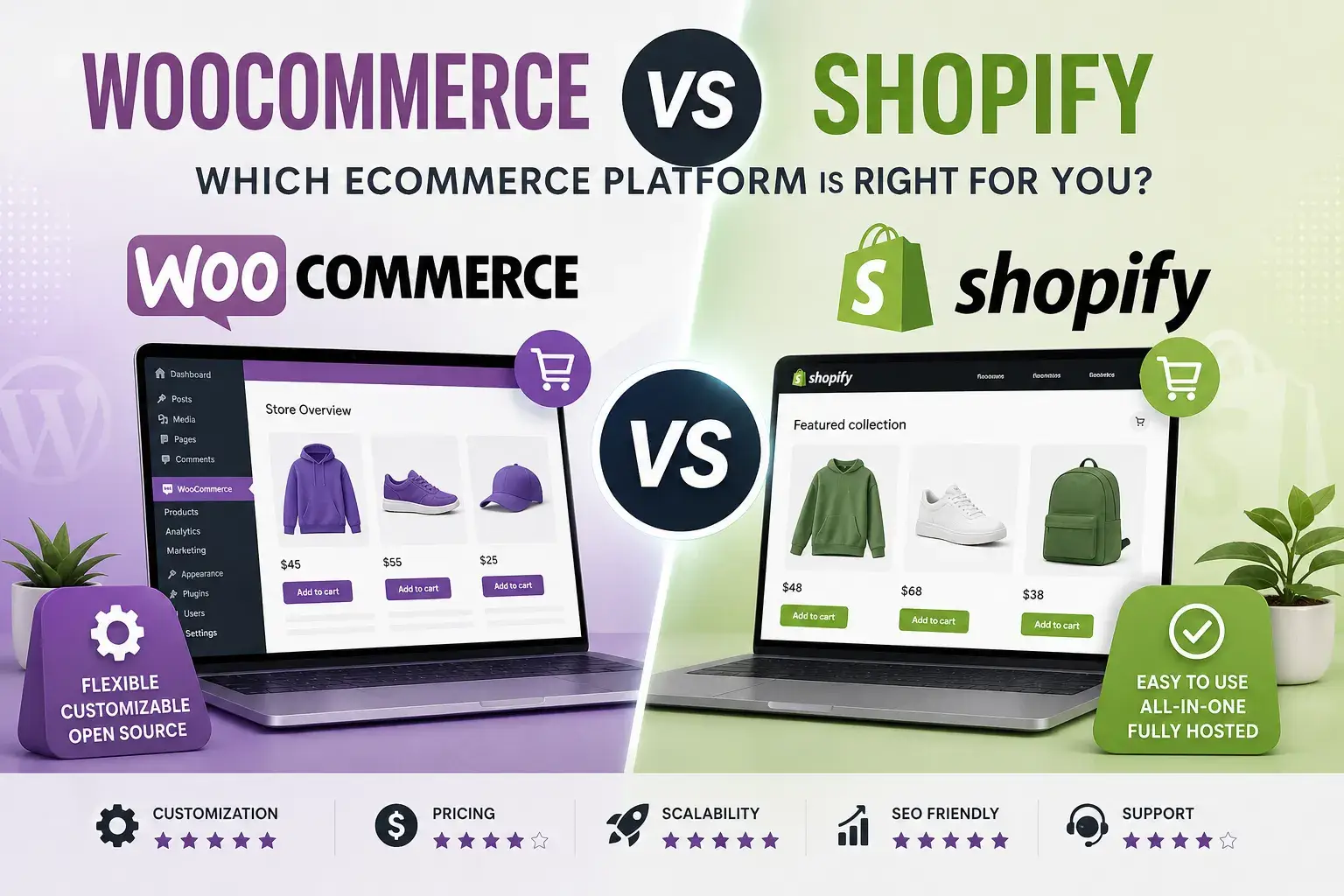
WooCommece vs Shopify (2026 Guide): Which one Should You Choose?
If you’re planning to build an online store in 2026, one question comes up almost every single time:
WooCommerce vs Shopify — which one is better?
And honestly? There’s no one-size-fits-all answer.
I’ve worked with both platforms across different types of businesses — startups, scaling brands, and even enterprise-level stores — and the truth is:
The “best” platform depends entirely on your goals, budget, and how much control you want.
In this guide, I’ll break it down in a practical way — not just features, but real-world decision-making.
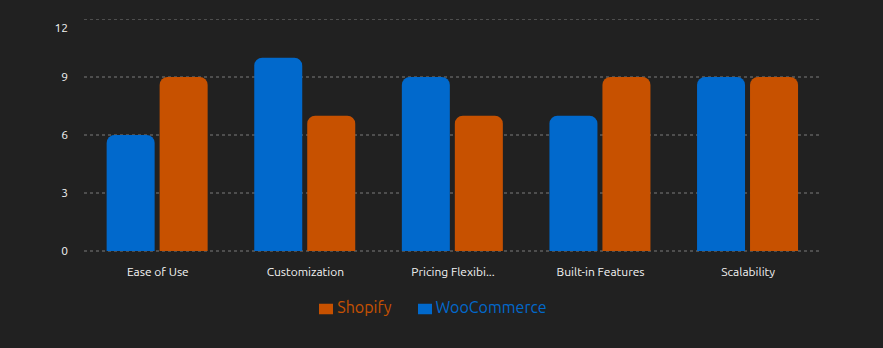
Quick Overview: WooCommerce vs Shopify
High-level comparison across key decision factors for ecommerce platforms.
What is WooCommerce?
WooCommerce is a WordPress plugin that turns your website into a fully functional ecommerce store.
It’s open-source, meaning:
- You have full control
- You can customize literally anything
- But… you’re responsible for managing everything
Think of WooCommerce like building your own house.
WooCommerce gives you full control and flexibility, especially when working with a professional WooCommerce development service that can customize everything to your needs.
What is Shopify?
Shopify is a fully hosted ecommerce platform.
Everything is managed for you:
- Hosting
- Security
- Updates
- Payments
Think of Shopify like renting a luxury apartment — clean, easy, but limited customization.
Shopify is ideal if you want a fast, hassle-free setup — especially when handled by experienced Shopify development experts who can launch your store quickly.
Ease of Use: Shopify Wins (For Most People)
If you’re a beginner, Shopify is hard to beat.
Shopify:
- Setup takes 1–2 hours
- No technical skills needed
- Clean dashboard
- Drag-and-drop sections
WooCommerce:
- Requires:
- Hosting setup
- WordPress installation
- Plugin configuration
- Learning curve is higher
Verdict:
If you want fast launch → Shopify
If you don’t mind setup → WooCommerce
Customization: WooCommerce Dominates
This is where WooCommerce absolutely crushes Shopify.
WooCommerce:
- Full code access (PHP, CSS, JS)
- Unlimited customization
- Build anything:
- Custom checkout flows
- Membership systems
- Complex pricing logic
Shopify:
- Uses Liquid (limited flexibility)
- Apps required for advanced features
- Customization can get expensive
Verdict:
If you want complete control → WooCommerce wins
Pricing: The Hidden Truth Most Blogs Don’t Tell You
Let’s break this down honestly.
Shopify Pricing (Monthly)
- Basic: ~$39/month
- Shopify: ~$105/month
- Advanced: ~$399/month
Plus:
- Apps (often $5–$50/month each)
- Transaction fees (if not using Shopify Payments)
WooCommerce Pricing
- Plugin: Free
- Hosting: $5–$30/month
- Theme: $0–$100 (one-time)
- Plugins: Optional
Realistically:
| Scenario | WooCommerce | Shopify |
|---|---|---|
| Starter store | Cheaper | Moderate |
| Growing store | Still flexible | Can get expensive |
| Large store | More cost control | High monthly cost |
Verdict:
- Budget-friendly → WooCommerce
- Predictable cost → Shopify
Performance & Speed
Shopify:
- Optimized hosting
- Fast out of the box
- No maintenance needed
WooCommerce:
- Depends on hosting + optimization
- Can be extremely fast (if done right)
- Can be slow (if done wrong)
Verdict:
- No effort → Shopify
- Optimized properly → WooCommerce can outperform
SEO Capabilities
This is important for long-term growth.
WooCommerce:
- Full SEO control
- Plugins like RankMath / Yoast
- Custom URL structures
- Advanced schema & technical SEO
Shopify:
- Good basic SEO
- Limited URL control
- Some technical restrictions
Verdict:
If SEO is a priority → WooCommerce wins
(And this matters if you’re targeting global clients like you are.)
Payment Options
Shopify:
- Built-in Shopify Payments
- Easy setup
- Extra fees for third-party gateways
WooCommerce:
- Supports almost everything
- No forced payment system
- More flexibility for local gateways
Verdict:
WooCommerce is more flexible, especially for regional markets.
Scalability
Both platforms can scale — but differently.
Shopify:
- Handles scaling automatically
- Ideal for fast-growing brands
- No server worries
WooCommerce:
- Scales with infrastructure
- Needs proper setup (hosting/CDN/cache)
Verdict:
- Hands-off scaling → Shopify
- Full control scaling → WooCommerce
Security
Shopify:
- Fully managed security
- PCI compliant
- No responsibility on you
WooCommerce:
- You manage:
- Security plugins
- Updates
- Backups
Verdict:
Shopify is safer for non-technical users.
Apps & Plugins
Shopify:
- App store is polished
- But many apps are paid
WooCommerce:
- Massive plugin ecosystem
- Many free options
- More flexibility
Verdict:
WooCommerce gives more freedom, Shopify gives more simplicity.
Real-World Use Cases
Choose Shopify if:
- You want to launch quickly
- You hate technical setup
- You prefer simplicity
- You’re running dropshipping or DTC brand
Choose WooCommerce if:
- You want full control
- You care about SEO
- You want to reduce long-term costs
- You need custom functionality
My Honest Take (From Experience)
Here’s the reality most agencies won’t say clearly:
Shopify is easier
WooCommerce is more powerful
If you’re:
- A beginner → Shopify feels amazing
- A serious business → WooCommerce gives you leverage
WooCommerce vs Shopify: Final Verdict
Let’s make it super clear:
- Best for beginners: Shopify
- Best for customization: WooCommerce
- Best for SEO: WooCommerce
- Best for quick launch: Shopify
- Best long-term control: WooCommerce
Conclusion
The WooCommerce vs Shopify debate isn’t about which is “better.”
It’s about:
Control vs Convenience
- Shopify = smooth, fast, controlled
- WooCommerce = flexible, powerful, customizable
If you’re building a real brand that you want to scale and control long-term, WooCommerce is often the smarter choice.
But if you want something that “just works” with minimal effort, Shopify is hard to beat.
FAQ's
Which is better: WooCommerce or Shopify?
Is WooCommerce cheaper than Shopify?
Is Shopify easier than WooCommerce?
Which platform is better for SEO: WooCommerce or Shopify?
Can I switch from Shopify to WooCommerce later?
Still Not Sure Which Platform Is Right for You?
Get expert guidance based on your business, budget, and growth goals — not generic advice.